APPG Urges Government to Rethink Proposed Stablecoin Holding Caps
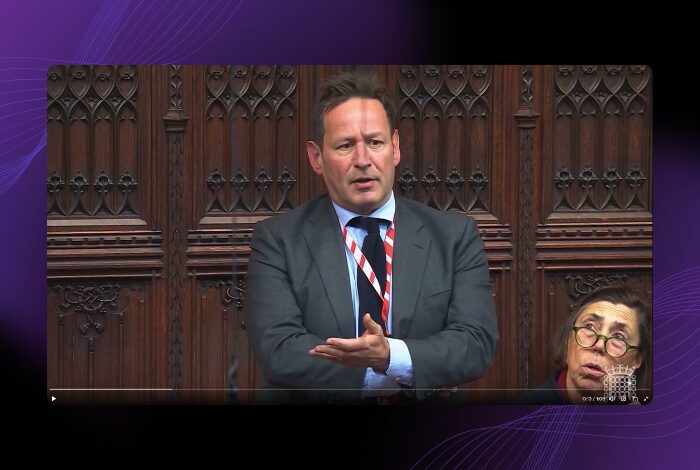
Lord Vaizey of Didcot, Co-Chair of Parliament’s Crypto & Digital Assets All-Party Parliamentary Group (APPG), supported by CryptoUK as secretariat, has urged the Government to reconsider proposed limits on how much stablecoin individuals can hold, warning the approach risks sending the wrong signal to investors and firms considering the UK.
Speaking in a House of Lords debate, Lord Vaizey questioned whether the Bank of England’s plans to regulate individual holdings could deter crypto businesses from basing themselves in the UK. He told Parliament:
“Does not the Bank of England’s announcement that it plans to regulate how much stablecoin an individual can hold send a terrible signal to people who want to base their crypto businesses in the UK? Will he ask the Bank of England to publish its modelling? Its reasoning is based on the idea that unlimited holdings of stablecoins might lead to a run on bank deposits.”
Responding for the Government, Lord Livermore, the UK’s Financial Secretary to the Treasury, said that while facilitating stablecoin innovation is important for UK competitiveness, the design of the regime is a matter for the Bank of England as the independent regulator for systemic stablecoins. He noted that the Bank published a discussion paper in November 2023 on its proposed regulatory framework and is expected to consult formally on the systemic stablecoin regime in the coming months.
The Bank of England is reportedly considering ownership limits of £10,000 – £20,000 for individuals and £10 million for businesses for “systemic” stablecoins. The proposals stem from the Bank’s 2023 consultation, which raised concerns about the risk of large outflows from traditional bank deposits if stablecoins are adopted at scale.
Following industry criticism, it has been reported that the Bank is considering exemptions allowing crypto exchanges and other large entities to exceed the £10 million business cap, although individual caps of between £10,000 and £20,000 would remain. The Bank has described the limits as “transitional,” suggesting they could be raised or removed once financial stability risks are mitigated. It is also expected to publish a further consultation later this year.
Industry groups have argued that ownership caps would place the UK at a competitive disadvantage compared to the United States and the EU, neither of which imposes equivalent limits under their respective frameworks. Critics also point to practical challenges, noting that stablecoin issuers cannot easily identify end holders of tokens, which could make enforcement costly and complex.
More broadly, opponents warn that restrictive measures could deter investment and push innovation overseas, undermining the UK’s ambition to be a global hub for digital assets.
To find out more about the APPG or to get involved, please get in touch via the contact form on the APPG page.