Crypto Philanthropy Shows What Real-World Digital Asset Adoption Looks Like
For all the debate about what digital assets might become, charitable giving provides a useful test of what they can already do.
If someone holds wealth in crypto and wants to support a charity, can that value move from donor to cause safely, efficiently and in a form the charity can use? Increasingly, the answer is yes. But the route depends on governance, trusted infrastructure, tax treatment, donor confidence and a willingness from charities to engage with a form of giving which still sits outside many traditional fundraising models.
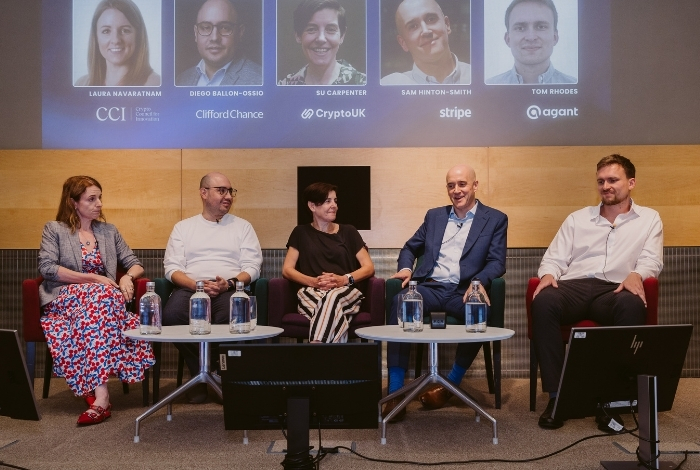
These issues were explored during CryptoUK’s recent webinar, ‘Crypto for Good: How Digital Assets Are Transforming Charitable Giving’, moderated by Nick Brooks, Policy Director at CryptoUK.
The discussion brought together Cinta Esmel, Director of Development at Roald Dahl’s Marvellous Children’s Charity; Jessica Black, Online Fundraising Officer at Alzheimer’s Research UK; and Aidan Alberico, Head of Corporate Sustainability at LMAX Group. Each brought a different perspective: charity governance, digital fundraising, and the market infrastructure needed to receive, convert and move digital assets.
Why Charities Are Looking At Crypto
For charities, the argument for accepting crypto donations is not that every organisation needs to become crypto-native. It is that donors increasingly hold wealth in different forms, and charities should be able to receive support in the form donors are able and willing to give.
Cinta explained that Roald Dahl’s Marvellous Children’s Charity saw crypto donations as another way for people to support seriously ill children and their families. The aim was to reduce friction, reach donors who may not have come through conventional fundraising routes, and make sure generosity was not lost because the asset being donated was unfamiliar.
Jessica described a similar logic at Alzheimer’s Research UK, which began accepting cryptocurrency in 2023. As a charity focused on research and innovation, it saw crypto giving as a way to engage new, digitally oriented supporters while offering another route into its work. She was clear, however, that the decision has to be assessed charity by charity.
Aidan set out the infrastructure challenge from LMAX Group’s perspective. Charities may want to accept digital assets, but they also need to think about receipt, screening, conversion, cross-border movement of funds, fees and controls. LMAX Group’s work with charities and nonprofit organisations is designed to bridge that gap.
Governance And Trust
One of the strongest messages from the discussion was that accepting crypto donations is a governance question as much as a technical one. Cinta described the process for Roald Dahl’s Marvellous Children’s Charity as a careful internal exercise involving trustees, colleagues and advisers, with questions around financial crime risk, sanctions screening, donor anonymity, accounting treatment, conversion policy and reputational risk.
Those questions should not be dismissed as resistance to innovation. Charities depend on public trust, and their willingness to explore new forms of giving has to sit alongside the standards which allow donors, beneficiaries and regulators to have confidence in their work.
Alzheimer’s Research UK has also had to build internal understanding. Jessica explained that staff do not need to become blockchain specialists, but they do need enough knowledge to speak to supporters confidently, use the right terminology and know when to bring in specialist advice.
Different Donors, Real Impact
The panel also discussed how crypto donors can behave differently from traditional supporters. Some are more likely to remain anonymous or avoid conventional stewardship through email updates, named recognition and long-term relationship-building. The answer is not to force these donors into an old model, but to make impact visible, communicate clearly in the channels where crypto communities spend time, and allow donors to decide whether they want a deeper relationship.
The most persuasive part of the discussion was the evidence that crypto donations have already funded tangible charitable work. Roald Dahl’s Marvellous Children’s Charity received its largest crypto donation after an anonymous digital artist sold a limited-edition collection and donated part of the proceeds. The donation funded a Roald Dahl specialist nurse for an entire year, helping more than 100 seriously ill children and their families receive practical and emotional support.
Alzheimer’s Research UK has also used crypto giving to connect the donation method with the work being funded. In 2024, crypto donations contributed towards a research project using artificial intelligence in the search for a cure for dementia. Jessica explained that the link between a technology-oriented donor base and an innovative research project helped create a clearer story for supporters.
LMAX Group’s contribution points to a wider opportunity. Aidan argued that digital asset and stablecoin infrastructure could help reduce the cost and complexity of moving charitable funds internationally, particularly where several intermediaries, currencies or jurisdictions are involved. For charities working across borders or responding to urgent need, reducing those layers of friction could mean more money reaching the intended destination more quickly.
Policy And Industry Need To Catch Up
Policy still needs to adapt to how digital assets are being used. Donating crypto directly to a registered charity may provide capital gains tax benefits in certain circumstances, but crypto donations do not currently fit Gift Aid in the same way as eligible cash donations. Stablecoins raise further questions because they are often used like payment instruments, while their tax treatment can still create complexity.
The case is not for preferential treatment. It is for rules which do not make a legitimate method of charitable giving unnecessarily difficult because the asset being donated does not sit neatly inside older categories.
There is also a challenge for the crypto industry itself. If companies in the sector believe digital assets can make payments and transfers more efficient, more of them should be willing to demonstrate that utility through their own charitable giving.
The long-term measure of success may be that the phrase ‘crypto donation’ eventually becomes unnecessary. Charities do not usually describe a bank transfer as a fiat donation. Over time, digital assets may simply become another way in which supporters transfer value to the causes they care about.
Find out more
Roald Dahl’s Marvellous Children’s Charity supports seriously ill children across the UK through its network of specialist nurses.
Alzheimer’s Research UK is the UK’s leading dementia research charity, working to find a cure for dementia.
LMAX Group works with charities and nonprofit organisations to help them receive, convert and move digital assets, stablecoins and traditional currencies.
To discuss this webinar or CryptoUK’s policy work, please reach out to us through our contact page.